EUREKA!

EUREKA!
Happy Hour
Apes that went ape for fermented fruit led to humans’ taste and tolerance for alcohol.
In a paper published in BioScience, anthropology prof Nathan Dominy and Luke Fannin, Adv’25, report African apes with a fondness for overripe fruit that had fallen from trees may have triggered an amino acid change, boosting their ability to metabolize alcohol by 40 times. As humans’ common ancestor, apes’ ability to catalyze ethanol has relevance to human evolution and our own taste and tolerance for drinking.
The researchers coined the term “scrumping,” derived from a medieval German word for shriveled or shrunken, to describe the gathering of fallen fruit—which the apes found, well, scrumptious. Scrumping also may have spared large apes the risk of climbing and falling out of trees.
Gadget Detectors
Outsmarting smart-home devices to protect security and privacy
»> The SPLICE (Security and Privacy in the Lifecycle of loT for Consumer Environments) Lab has developed scanner technology that uses radio waves to detect hidden or passive consumer electronics, even when they are powered off or disconnected from a network. Led by computer science prof David Kotz ’86, the lab is a multi-university team that aims to improve security and privacy in homes equipped with smart devices, from door locks to lights.
The newly enhanced “autonomous spatial harmonic radar” can sweep across a room, listen for echoes from the metal and semiconductors inside electronics, and produce a map showing where the electronics are located. Computer science prof Timothy Pierson points out that the new owner of a house chock full of smart devices would be able to discover what electronics might have been left behind.
Nancy Schoeffler
More From This Issue
-
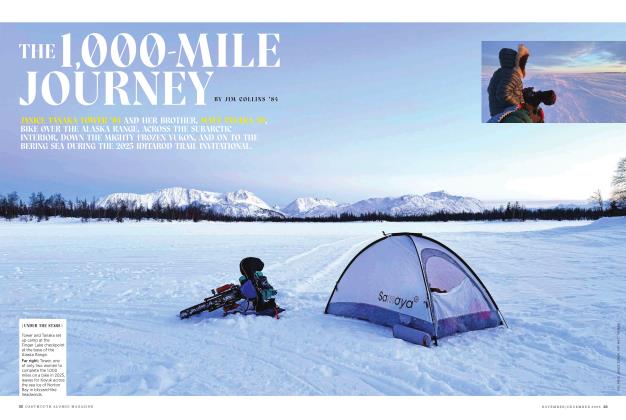
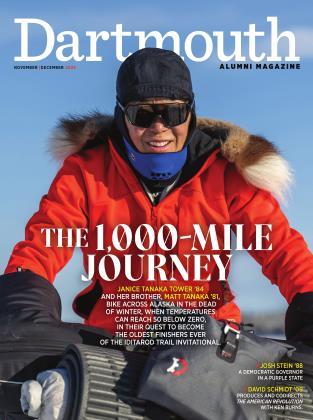
The 1,000-mile Journey
NOVEMBER | DECEMBER 2025 -

Bridge Builder
NOVEMBER | DECEMBER 2025 -

America’s First Civil War
NOVEMBER | DECEMBER 2025 -
 ENTREPRENEUR
Tough as Nails
NOVEMBER | DECEMBER 2025 -
 PERSONAL HISTORY
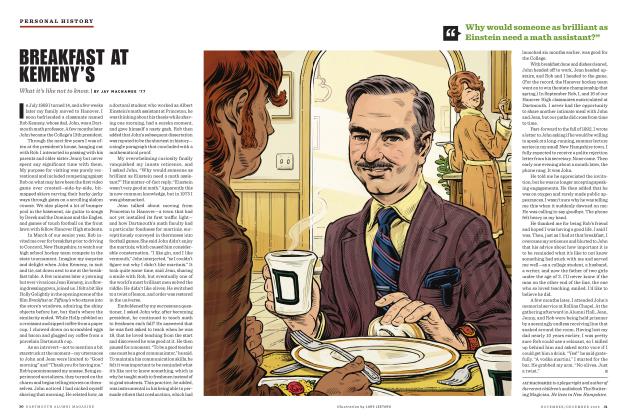
Breakfast at Kemeny’s
NOVEMBER | DECEMBER 2025 -
 RESEARCH
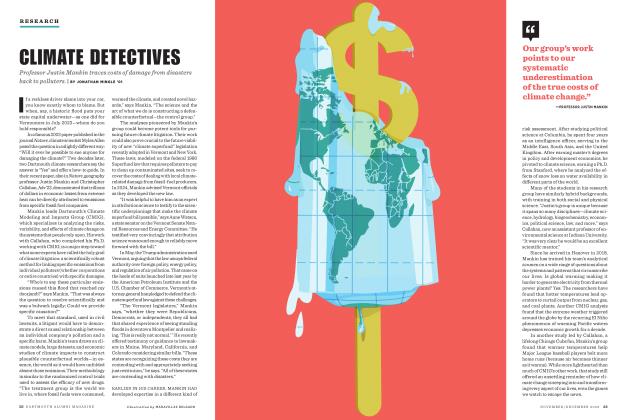
Climate Detectives
NOVEMBER | DECEMBER 2025