Three Questions for President Sian Beilock
Amid the ongoing debate regarding the Trump administration’s attacks on higher education, in late May DAM asked how Dartmouth is addressing these divisive issues.
Amid the ongoing debate regarding the Trump administration’s attacks on higher education, in late May DAM asked how Dartmouth is addressing these divisive issues.
Three Questions for President Sian Beilock
AROUND THE GREEN
Amid the ongoing debate regarding the Trump administration’s attacks on higher education, in late May DAM asked how Dartmouth is addressing these divisive issues.
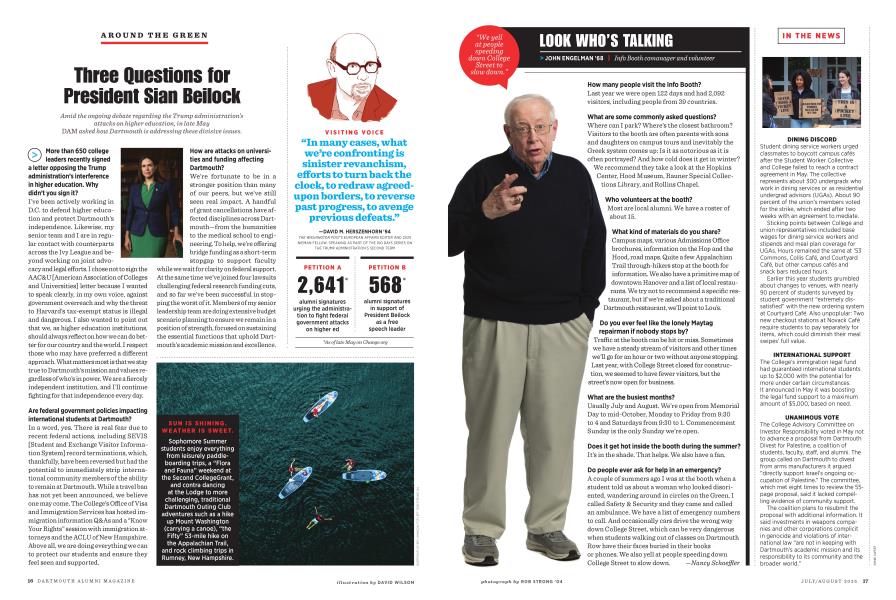
More than 650 college leaders recently signed a letter opposing the Trump administration’s interference in higher education. Why didn’t you sign it?
I’ve been actively working in D.C. to defend higher education and protect Dartmouth’s independence. Likewise, my senior team and I are in regular contact with counterparts across the Ivy League and beyond working on joint advocacy and legal efforts. I chose not to sign the AAC&U [American Association of Colleges and Universities] letter because I wanted to speak clearly, in my own voice, against government overreach and why the threat to Harvard’s tax-exempt status is illegal and dangerous. I also wanted to point out that we, as higher education institutions, should always reflect on how we can do better for our country and the world. I respect those who may have preferred a different approach. What matters most is that we stay true to Dartmouth’s mission and values regardless of who’s in power. We are a fiercely independent institution, and I’ll continue fighting for that independence every day.
Are federal government policies impacting international students at Dartmouth?
In a word, yes. There is real fear due to recent federal actions, including SEVIS [Student and Exchange Visitor Information System] record terminations, which, thankfully, have been reversed but had the potential to immediately strip international community members of the ability to remain at Dartmouth. While a travel ban has not yet been announced, we believe one may come. The College’s Office of Visa and Immigration Services has hosted immigration information Q&As and a “Know Your Rights” session with immigration attorneys and the ACLU of New Hampshire. Above all, we are doing everything we can to protect our students and ensure they feel seen and supported.
How are attacks on universities and funding affecting Dartmouth?
We’re fortunate to be in a stronger position than many of our peers, but we’ve still seen real impact. A handful of grant cancellations have affected disciplines across Dartmouth—from the humanities to the medical school to engineering. To help, we’re offering bridge funding as a short-term stopgap to support faculty while we wait for clarity on federal support. At the same time we’ve joined four lawsuits challenging federal research funding cuts, and so far we’ve been successful in stopping the worst of it. Members of my senior leadership team are doing extensive budget scenario planning to ensure we remain in a position of strength, focused on sustaining the essential functions that uphold Dartmouth’s academic mission and excellence.
VISITING VOICE
“In many cases, what we’re confronting is sinister revanchism, efforts to turn back the clock, to redraw agreedupon borders, to reverse past progress, to avenge previous defeats.”
-DAVID M. HERSZENHORN ’94
THE WASHINGTON POST’S EUROPEAN AFFAIRS EDITOR AND 2025 NIEMAN FELLOW, SPEAKING AS PART OF THE 100 DAYS SERIES ON THE TRUMP ADMINISTRATION’S SECOND TERM
PETITION A 2,641 alumni signatures urging the administration to fight federal government attacks on higher ed
PETITION B 568 alumni signatures in support of President Beilock as a free speech leader
*As of late May on Change.org
SUN IS SHINING. WEATHER IS SWEET
Sophomore Summer students enjoy everything from leisurely paddleboarding trips, a “Flora and Fauna” weekend at the Second CollegeGrant, and contra dancing at the Lodge to more challenging, traditional Dartmouth Outing Club adventures such as a hike up Mount Washington (carrying a canoe), “the Fifty” 53-mile hike on the Appalachian Trail, and rock climbing trips in Rumney, New Hampshire.
AROUND THE GREEN
-
 AROUND THE GREEN
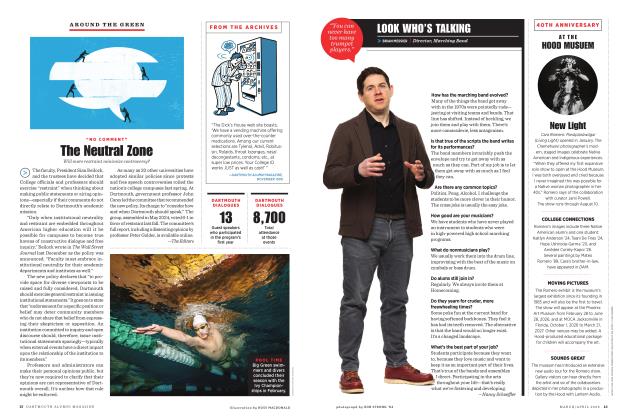
“NO COMMENT” The Neutral Zone
APRIL 2025 -
 AROUND THE GREEN
CAMPUS CONFIDENTIAL
MAY | JUNE 2025 -
 AROUND THE GREEN
CAMPUS CONFIDENTIAL
NOVEMBER | DECEMBER 2025 -
 AROUND THE GREEN
CAMPUS CONFIDENTIAL
MAY | JUNE 2026 -
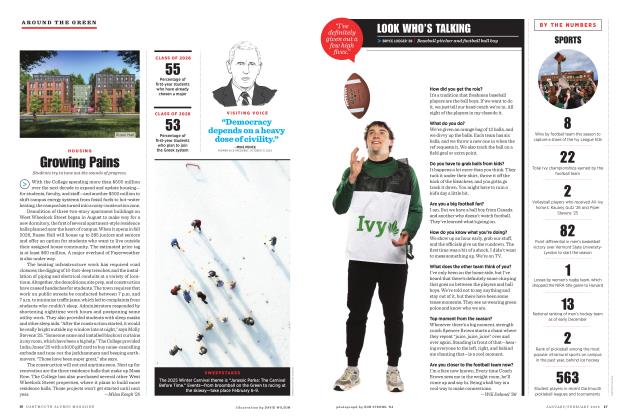 AROUND THE GREEN
HOUSING Growing Pains
JANUARY | FEBRUARY 2025 -
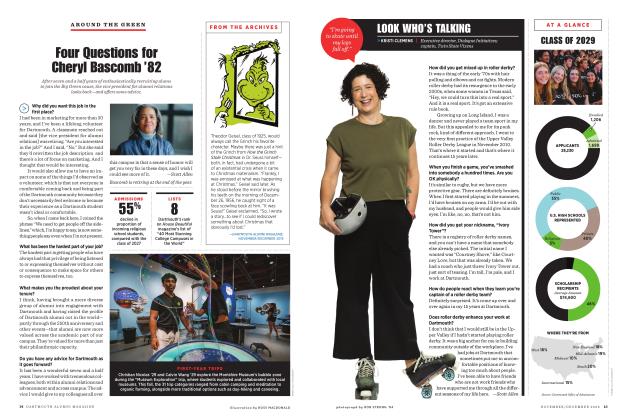 AROUND THE GREEN
Four Questions for Cheryl Bascomb '82
NOVEMBER | DECEMBER 2025
