Geographical Distribution of Students
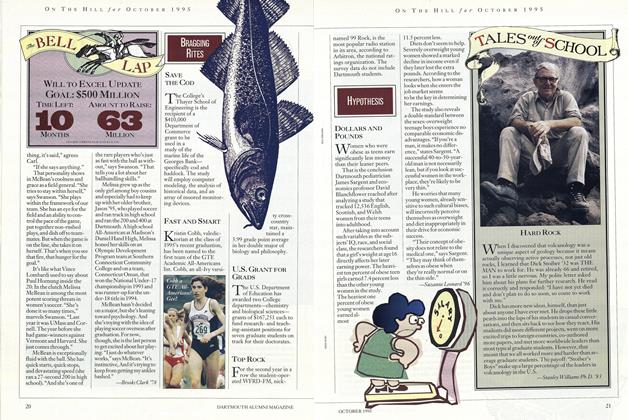
The geographical distribution of students in the College shows some interesting developments. In the fall of 1897 the number of students from Massachusetts for the first time exceeded that from New Hampshire. Since then Massachusetts maintained a growing majority until in 1908 she had more than twice as many representatives as New Hampshire. The crest of the wave seems to have been reached in that year with 502 students from Massachusetts to 187 from New Hampshire. In the present year the numbers are 432 from Massachusetts and 217 from New Hampshire. The deficiency from Massachusetts is, however, more than made good this year from other sections of the country. The numbers quoted above are from the academic department of the College alone.
The relative position of the states has been fairly constant of late years—the first eight states in order being Massachusetts, New Hampshire, New York, Vermont, Illinois, Maine, with Ohio and Connecticut fighting for seventh place, Ohio being generally in the lead. An interesting development in the present freshman class is New York's rivalry with New Hampshire, the latter state leading by one man only, 57 to 56, and New Jersey's leap ahead of Connecticut. This year 13 men from New Jersey preferred Dartmouth to other colleges, while six years ago in the whole College but six men registered from that state.
Dartmouth graduates are loyal to their college in a practical way. The present freshman class at entrance consisted of 398 students. Of these 90 were the sons of college trained men. The mothers of five only were college graduates. Of the 90 fathers who were college men 27 were graduates of Dartmouth: 54 other colleges are represented by the parents, Columbia and Harvard leading, with the University of Vermont a close second. Among these universities represented are five outside of the United States.
The students seem to be drawn more and more largely from the families of non-professional men. From the families of clergymen, lawyers, doctors, and teachers we have 70 students, and including engineers 83. All the rest are from the families of non-professional and largely non-college men. The sons of merchants head the list with 38 names, then manufacturers with 30 and, in or- der, lawyers 25, doctors 24, farmers 20, teachers 14, superintendents 12, bankers 12, lumber dealers 10, real estate men 9, clergymen 8, and so on. The fact that the fathers are engaged in 87 different occupations seems to insure that the tone of the College will keep its former democracy. Besides the larger groups mentioned, we have smaller numbers, or individual men, who are the sons of barbers, watchmen, blacksmiths, town-clerks, sextons, motormen, wheelwrights, musicians, plumbers, expressmen, masons, and janitors,
More and more, too, the high school seems to be preparing the boys to enter college, as over two thirds of the present freshman class fitted at their local high schools. Another interesting fact is that the fathers who were college graduates were much more likely to send their sons to an academy or private school for preparation than the non-college father. Whether these sons were better fitted to do their work in college, these statistics do not state.
A table showing the geographical distribution of the entire student body in 1909 and in the present year is appended. After the first sixteen states named in the list, it will be observed that the representation seems mainly scattering and accidental. The men who are of this representation may be considered, however, as indications of undiscovered constituencies, which with proper investigation and development on the part of alumni and friends of the College may well be of value:
1909 1910 Massachusetts.............. 481 449 New Hampshire.............. 235 243 New York.................... 117 132 Vermont..................... 85 91 Illinois.................... 52 62 Maine....................... 38 44 Ohio........................ 27 32 New Jersey.................. 22 25 Connecticut................. 24 24 District of Columbia........ 15 15 Rhode Island................ 13 15 Pennsylvania................ 11 14 Iowa........................ 12 13 Michigan.................... 6 10 Colorado.................... 11 8 Minnesota................... 10 8 South Dakota................ 3 4 California.................. 2 3 Maryland.................... 3 3 Montana..................... 1 3 Nebraska.................... 1 3 Texas....................... 1 3 Washington.................. 2 3 Florida..................... 2 2 Indiana..................... 4 2 Kentucky.................... 4 2 West Virginia............... 2 2 Arizona..................... 0 1 Arkansas.................... 1 1 Delaware.................... 1 1 Kansas...................... 2 1 North Dakota................ 1 1 Tennessee................... 1 1 Virginia.................... 0 1 China....................... 0 3 Egypt....................... 1 1 France...................... 1 1 Porto Rico.................. 0 1
More From This Issue
-
 Article
THE DIARY OF WILLIAM SMITH
December 1910 -
 Article
Honor Night
December 1910 -
 Article
Football
December 1910 -
Article
Football
December 1910 -
 Article
The degree of rapidity with which reports
December 1910 -
 Article
Edward K. Hall's Services to Dartmouth—Resolutions by the Athletic Council
December 1910