Who Alibis Whom ?
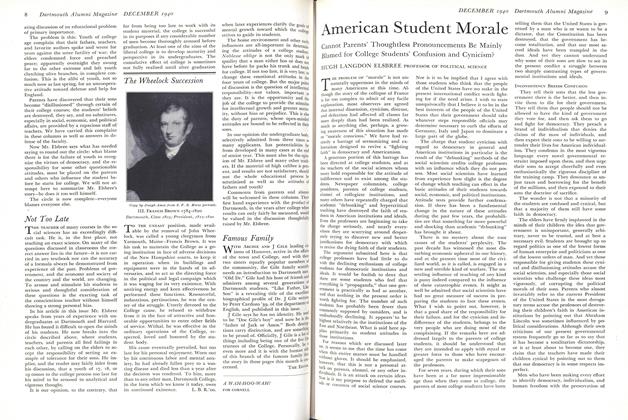
WE APPRECIATE the courtesy of Hugh Elsbree, professor of political science, in showing us his statement which was written well before the November 5 election and is published in this issue. The author was modest about the worth of the article and thoughtful in suggesting that the editors might like to look it over but return the manuscript if it was "too controversial" or otherwise not suited, in their opinion, for publication. We requested the article for our columns and are pleased to pass on to alumni Mr. Elsbree's stimulating discussion of an educational problem of primary importance.
The problem is this: Youth of college age complain that their fathers, teachers, and favorite authors spoke and wrote for years against the utter futility of war; the elders condemned force and preached peace; apparently overnight they swung far to the other extreme and left youth clutching olive branches, in complete confusion. This is the alibi of youth, not so much now as last spring, for an uncooperative attitude toward defense and help for England.
Parents have discovered that their sons become "disillusioned" through certain of their college courses; the students' beliefs are destroyed, they say, and no substitutes, especially in social, economic, and political affairs, are provided by a rapacious staff of teachers. We have carried this complaint in these columns as well as answers in defense of the faculty.
Now Mr. Elsbree says what has needed saying to round out the circle: what blame there is for the failure of youth to recognize the virtues of democracy, and the responsibility for some other questionable attitudes, must be placed on the parents and others who influence the student before he starts for college. We will not attempt here to summarize Mr. Elsbree's story—he does it too well himself.
The circle is now complete—everyone blames everyone else.