Collis Miniversity: "Catering to Personal interests"
Students at Dartmouth these days are showing that it is not necessary to forgo juggling or judo for the pursuit of physics or philosophy. Undergraduates are taking time out from formal academic instruction to learn to waltz, knit, play bridge, mix margaritas, change carburetors, and more.
It's all part of "Collis Miniversity," a program of non-credit extracurricular courses begun winter term under the sponsorship of the Collis Center. The courses range from Guitar and Gourmet Cooking to Contemporary Ethical Issues and Effective Reading Improvement. They are affordable ($15 for one course, $25 for two, and $30 for three) and not too time-consuming, meeting only an hour or two every week.
The Miniversity's founder and director, Lori Bamberger '85, picked the project as the focus of her Collis Center administrative internship. She felt that Collis needed to broaden its appeal and that students wanted some special courses the curriculum couldn't offer or their academic plans couldn't accommodate. At first, friends and colleagues feared non-credit courses would be unwelcome extra commitments in the lives of already-busy Dartmouth students. Not Bamberger. "Whether it is learning to care for your car or discussing ethical issues," she believes, "students have pursuits that can't physically be held in the classroom or can't fit in their official Dartmouth course programs. I thought many students wanted more programs to cater to their personal interests."
Her hunch was right on target and her program has surpassed her highest hopes. She would have been happy to attract 50 students for the 18 classes offered winter term. She got more than 200. This spring, almost 350 students about 10 percent of the term's total registration are enrolled in the Miniversity, which has swelled to 29 courses. Half of the courses are overbooked and more than a hundred students had to be turned away. "Students are voting with their feet in enormous numbers for these human interest courses," says Steve Nelson, director of the Collis Center. "We're offering a chance to fulfill put-aside interests and pent-up desires."
Students taking special-interest courses is only part of the plan. The real beauty of the Miniversity, according to Nelson, is that "it offers a chance for people to come forward who are interested in teaching some sort of course." Community members, administrators, faculty from other schools, even students who never thought they'd teach, are making suggestions.
The Miniversity's current success seems only the beginning. What makes the program work, Bamberger and Nelson agree, is student leadership. Since the Miniversity is making money, Bamberger plans a College-funded, full-time student directorship for next year. Enrollment promises to stay constant, at least. "I don't believe for a minute that it's a fad," states Nelson. "With the turnover of students every term, we could offer many of the same courses and still attract the same kind of enrollment numbers." What matters even more than numbers, however, is the "potential for creativity." That, Nelson says with a smile, is "infinite."
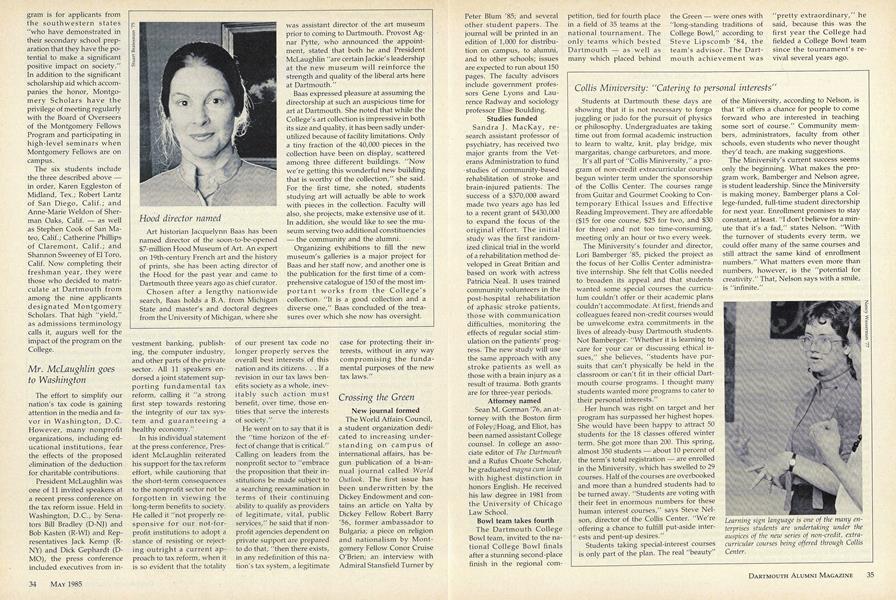
Learning sign language is one of the many enterprises students are undertaking under theauspices of the new series of non-credit, extracurricular courses being offered through CollisCenter.