Naked and the Fez
The old guys are right. Students don't dress like they used to.
1775
Knee britches are the fashion choice of Dr. Wheelock's students.
1778
Togas first appear on campus. Dr. Eleazsr Whrelock writes "My family & School are in want of Clothing... we have cut up all the Sheets Table Cloth and Towels See which could be spared in the House, to cover their nakedness, and have now Scarce a whole linen garment in the house."
1870
Students wearing green knickerbockers are barred from the recitation rooms.
1872
Dartmouth's young gentlemen stroll the campus in cutaway coats, vests, and top hats.
1875
The crew team poses, in uniform, for a picture. They wear long black slacks, long-sleeved white shirts, bow ties, and Stetson-style hats.
1882
When his blue flannel shirt fastened at the neck with a big black bow, tweed slacks tucked into riding boots, and gray cowboy hat don't attract enough attention, Richard Hovey 1885 dons even more bizarre apparel. Parading around town holding a sunflower while wearing knickers, silk stockings, and a monocle, Hovey is noticed.
1902
Trendy fraternity brothers sport slicked-back hair and high turtleneck sweaters with the waist cuffs folded up.
1930
2,200 students cut their pants off at the knees as part of the "Shorts Rebellion." Fox Movietone and New York newspapers show up to report on Dartmouth's contribution to collegiate fashions.
1969
Natty no longer, the wardrobe of choice when occupying campus buildings or going to class includes work boots, flannel shirt, jeans, and a denim jacket.
1974
The first campus streaker bares all.
1977
This magazine prices out the typical unisex campus uniform for the era; Levis or painter's pants ($15), waffle-stomper boots ($80), sweater or rugby shirt ($25), down vest ($30), and turdeneck ($12.50).
1999
After a 25-year absence, bellbottoms and polyester knit shirts are back in style.
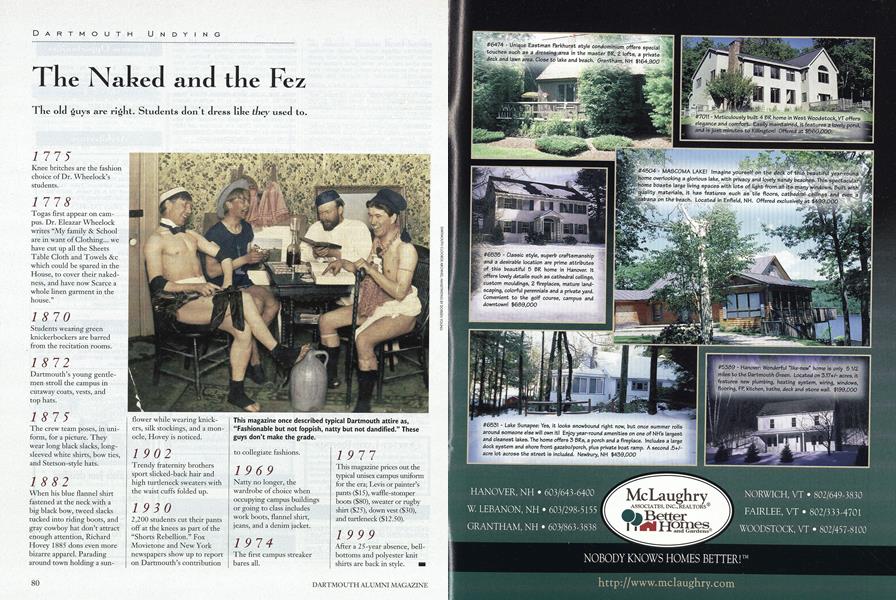
This magazine once described typical Dartmouth attire as, "Fashionable but not foppish, natty but not dandified." These guys don't make the grade.