Robert Hager '60
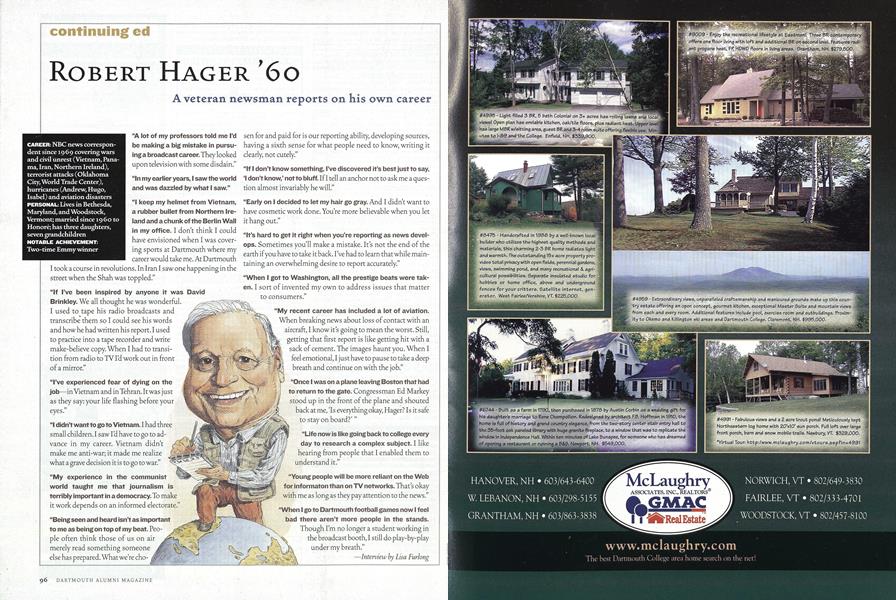
A veteran newsman reports on his own career
"A lot of my professors told me I'd be making a big mistake in pursuing a broadcast career. They looked upon television with some disdain."
"In my earlier years, I saw the world and was dazzled by what I saw,"
"I keep my helmet from Vietnam,a rubber bullet from Northern Ireland and a chunk of the Berlin Wallin my office. I don't think I could have envisioned when I was covering sports at Dartmouth where my career would take me. At Dartmouth I took a course in revolutions. In Iran I saw one happening in the street when the Shah was toppled."
"If I've been inspired by anyone it was DavidBrinkley. We all thought he was wonderful. I used to tape his radio broadcasts and transcribe them so I could see his words and how he had written his report. I used to practice into a tape recorder and write make-believe copy. When I had to transi- tion from radio to TV I'd work out in front of a mirror."
"I've experienced fear of dying on thejob—in Vietnam and in Tehran. It was just as they say: your life flashing before your eyes."
"I didn't want to go to Vietnam. I had three small children. I saw I'd have to go to advance in my career. Vietnam didn't make me anti-war; it made me realize what a grave decision it is to go to war."
"My experience in the communist world taught me that journalism is terribly important in a democracy. To make it work depends on an informed electorate."
"Being seen and heard isn't as importantto me as being on top of my beat. People often think those of us on air merely read something someone else has prepared. What we're chosen for and paid for is our reporting ability, developing sources, having a sixth sense for what people need to know, writing it clearly, not cutely."
"If I don't know something, I've discovered it's best just to say,'I don't know,' not to bluff. If I tell an anchor not to ask me a question almost invariably he will."
"Early on I decided to let my hair go gray. And I didn't want to have cosmetic work done. You're more believable when you let it hang out."
"It's hard to get it right when you're reporting as news develops. Sometimes you'll make a mistake. It's not the end of the earth if you have to take it back. I've had to learn that while maintaining an overwhelming desire to report accurately."
"When I got to Washington, all the prestige beats were taken. I sort of invented my own to address issues that matter to consumers."
"My recent career has included a lot of aviation. When breaking news about loss of contact with an aircraft, I know it's going to mean the worst. Still, getting that first report is like getting hit with a sack of cement. The images haunt you. When I feel emotional, I just have to pause to take a deep breath and continue on with the job."
"Once I was on a plane leaving Boston that hadto return to the gate. Congressman Ed Markey stood up in the front of the plane and shouted back at me, 'ls everything okay, Hager? Is it safe to stay on board?'"
"Life now is like going back to college every day to research a complex subject. I like hearing from people that I enabled them to understand it."
"Young people will be more reliant on the Web for informaton than on TV networks. That's okay with me as long as they pay attention to the news."
"When I go to Dartmouth football games now I feelbad there aren't more people in the stands. Though I'm no longer a student working in the broadcast booth, I still do play-by-play under my breath."
CAREER: NBC news correspondent since 1969 covering wars and civil unrest (Vietnam, Panama, Iran, Northern Ireland), terrorist attacks (Oklahoma City, World Trade Center), hurricanes (Andrew, Hugo, Isabel) and aviation disasters PERSONAL: Lives in Bethesda, Maryland, and Woodstock, Vermont; married since 1960 to Honore;has three daughters, seven grandchildren NOTABLE ACHIEVEMENT: Two-time Emmy winner
More From This Issue
-
 Cover Story
Back From Iraq
January | February 2004 -
 Feature
Is This Any Way to Make a Living?
January | February 2004 -
 Feature
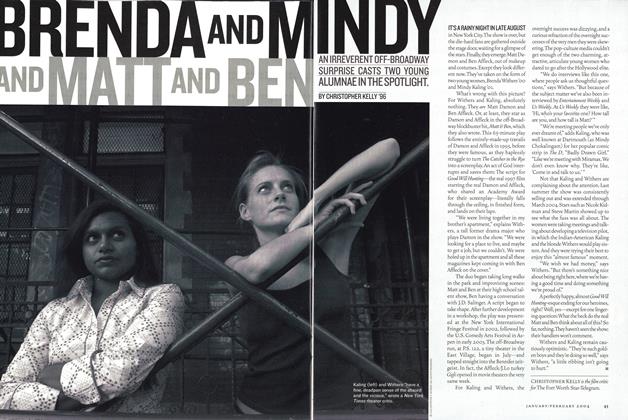
Brenda and Mindy and Matt and Ben
January | February 2004 -
 Alumni Opinion
Dollars and Sense
January | February 2004 -
 Article
Charting a New Financial Course
January | February 2004 -
 Interview
“Responding to Reality”
January | February 2004
Lisa Furlong
Continuing Ed
-
 Continuing Education
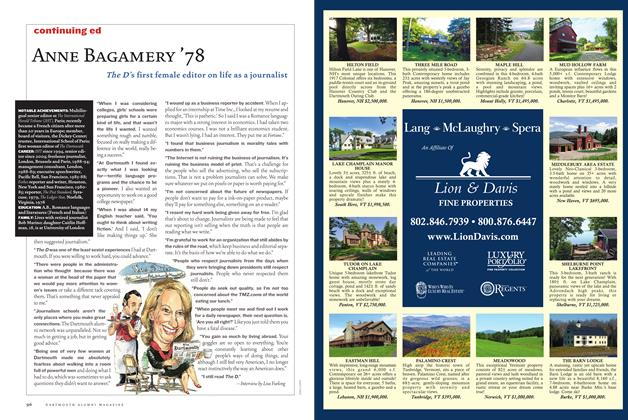
Anne Bagamery ’78
Mar/Apr 2010 -
 Continuing Ed
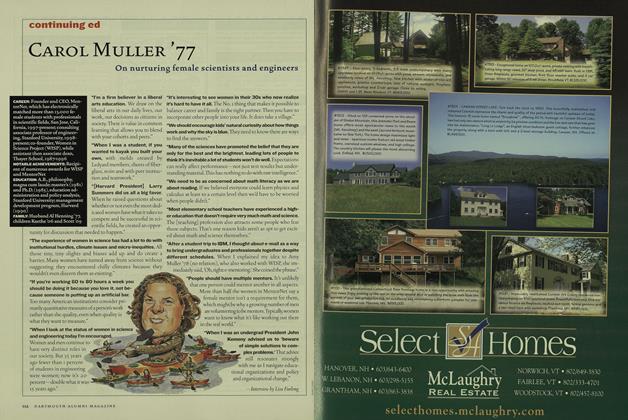
Carol Muller ’77
Sept/Oct 2005 -
 Continuing Ed
Art Koff ’57
May/June 2012 -
 CONTINUING ED
Allison K. Hoffman ’98
NOVEMBER | DECEMBER 2016 -
 CONTINUING ED
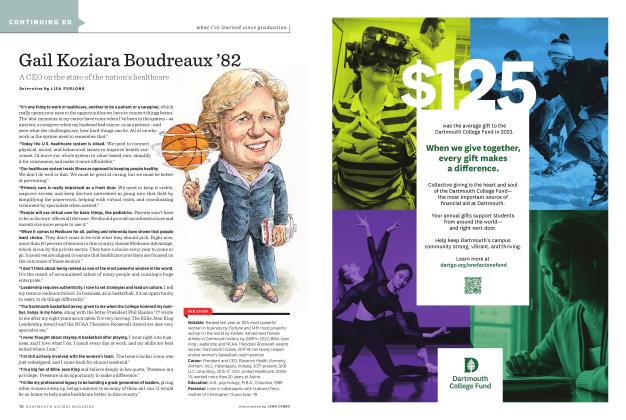
Gail Koziara Boudreaux '82
MARCH | APRIL 2024 -
 CONTINUING ED
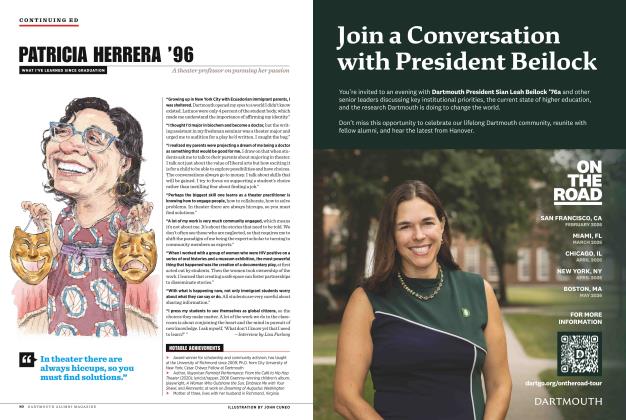
PATRICIA HERRERA ’96
MARCH | APRIL 2026
