John A. Rich '80
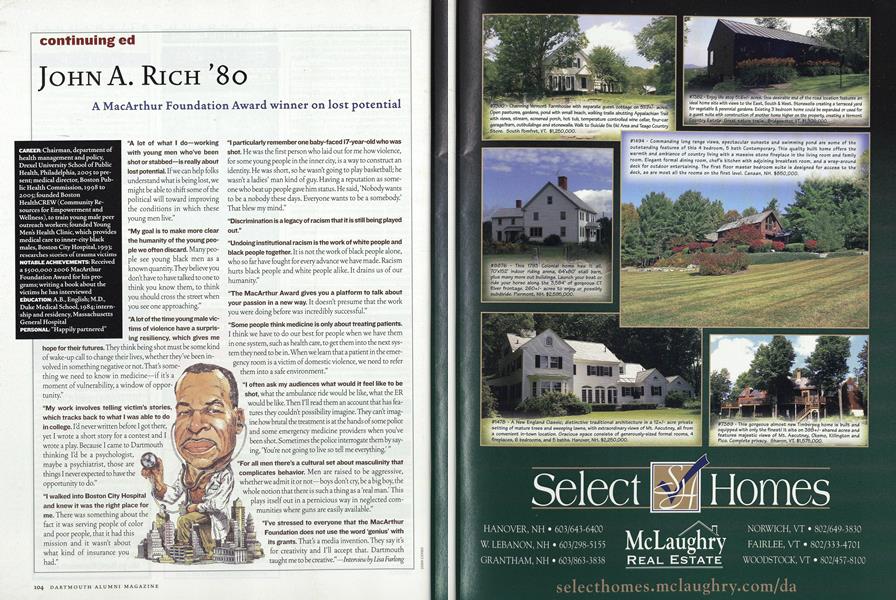
A Mac Arthur Foundation Award winner on lost potential
"A lot of what I do—workingwith young men who've beenshot or stabbed—is really aboutlost potential. If we can help folks understand what is being lost, we might be able to shift some of the political will toward improving the conditions in which these young men live."
"My goal is to make more clearthe humanity of the young people we often discard. Many people see young black men as a known quantity. They believe you don't have to have talked to one to think you know them, to think you should cross the street when you see one approaching."
"A lot of the time young male victims of violence have a surprising resiliency, which gives mehope for their futures. They think being shot must be some kind of wake-up call to change their lives, whether they've been involved in something negative or not. That's something we need to know in medicine—if it's a moment of vulnerability, a window of opportunity."
"My work involves telling victim's stories,which tracks back to what I was able to doin college. I'd never written before I got there, yet I wrote a short story for a contest and I wrote a play. Because I came to Dartmouth thinking I'd be a psychologist, maybe a psychiatrist, those are things I never expected to have the opportunity to do."
"I walked into Boston City Hospitaland knew it was the right place forme. There was something about the fact it was serving people of color and poor people, that it had this mission and it wasn't about what kind of insurance you had."
"I particularly remember one baby-faced 17-year-old who wasshot. He was the first person who laid out for me how violence, for some young people in the inner city, is a way to construct an identity. He was short, so he wasn't going to play basketball; he wasn't a ladies' man kind of guy. Having a reputation as someone who beat up people gave him status. He said, 'Nobody wants to be a nobody these days. Everyone wants to be a somebody.' That blew my mind."
"Discrimination is a legacy of racism that it is still being playedout."
"Undoing institutional racism is the work of white people andblack people together. It is not the work of black people alone, who so far have fought for every advance we have made. Racism hurts black people and white people alike. It drains us of our humanity."
"The Mac Arthur Award gives you a platform to talk aboutyour passion in a new way. It doesn't presume that the work you were doing before was incredibly successful."
"Some people think medicine is only about treating patients. I think we have to do our best for people when we have them in one system, such as health care, to get them into the next system they need to be in. When we learn that a patient in the emergency room is a victim of domestic violence, we need to refer them into a safe environment."
"I often ask my audiences what would it feel like to beshot, what the ambulance ride would be like, what the ER would be like. Then I'll read them an account that has features they couldn't possibility imagine. They can't imagine how brutal the treatment is at the hands of some police and some emergency medicine providers when you've been shot. Sometimes the police interrogate them by saying, 'You're not going to live so tell me everything.'"
"For all men there's a cultural set about masculinity thatcomplicates behavior. Men are raised to be aggressive, whether we admit it or not—boys don't cry, be a big boy, the whole notion that there is such a thing as a 'real man.' This plays itself out in a pernicious way in neglected communities where guns are easily available."
"I've stressed to everyone that the MacArthur Foundation does not use the word 'genius' with its grants. That's a media invention. They say it's for creativity and I'll accept that. Dartmouth taught me to be creative."-
CAREER: Chairman, department of health management and policy, Drexel University School of Public Health, Philadelphia, 2005 to present; medical director, Boston Public Health Commission, 1998 to 2005; founded Boston HealthCREW (Community Resources for Empowerment and Wellness), to train young male peer outreach workers; founded Young Men's Health Clinic, which provides medical care to inner-city black males, Boston City Hospital, 1993; researches stories of trauma victims NOTABLE ACHIEVEMENTS: Received a $500,000 2006 Mac Arthur Foundation Award for his programs; writing a book about the victims he has interviewed EDUCATION: A.8., English; M.D., Duke Medical School, 1984; internship and residency, Massachusetts General Hospital PERSONAL: "Happily partnered"
More From This Issue
-
 Cover Story
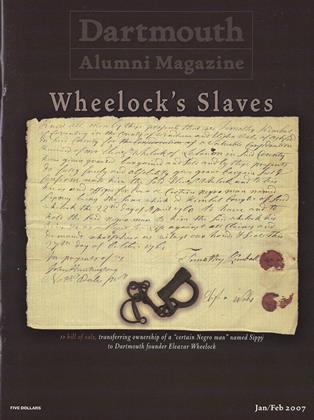
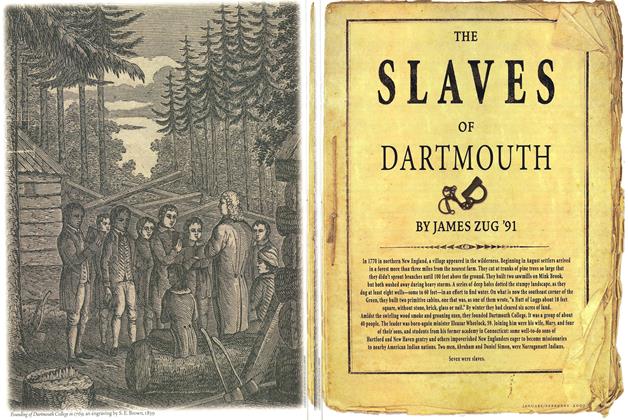
The Slaves of Dartmouth
January | February 2007 -
 Feature
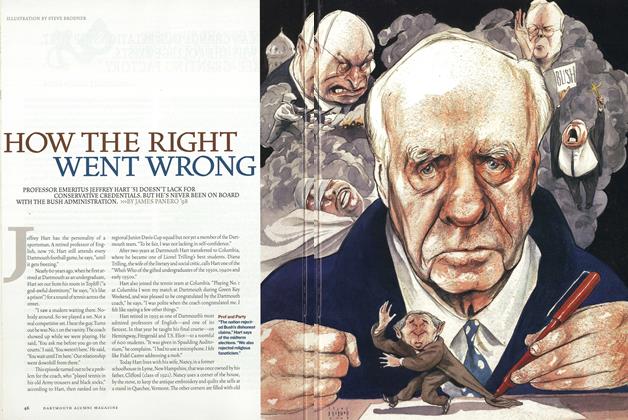
How the Right Went Wrong
January | February 2007 -
 Feature
Picking Up the Pieces
January | February 2007 -
 Feature
Notebook
January | February 2007 -
 Feature
Alumni News
January | February 2007 -
 Interview
Life with Oppenheimer
January | February 2007
Lisa Furlong
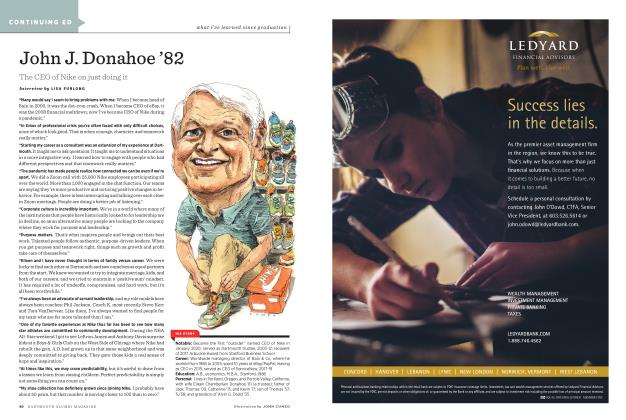
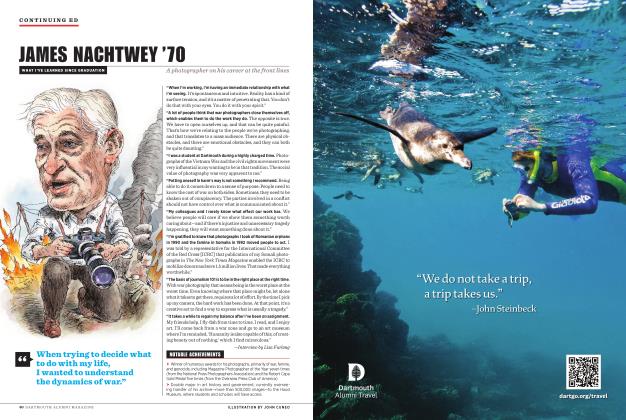
Continuing Ed
-
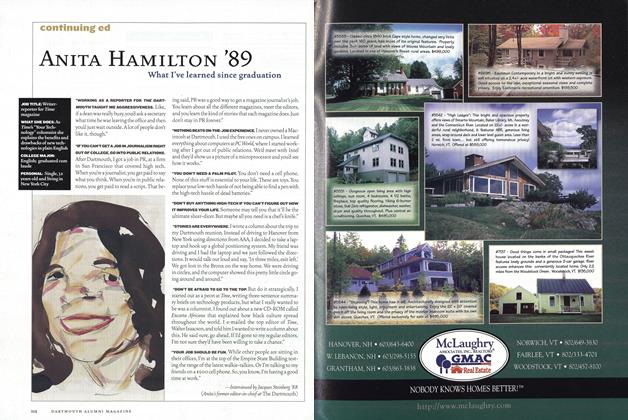 Continuing Education
Anita Hamilton '89
Jan/Feb 2001 -
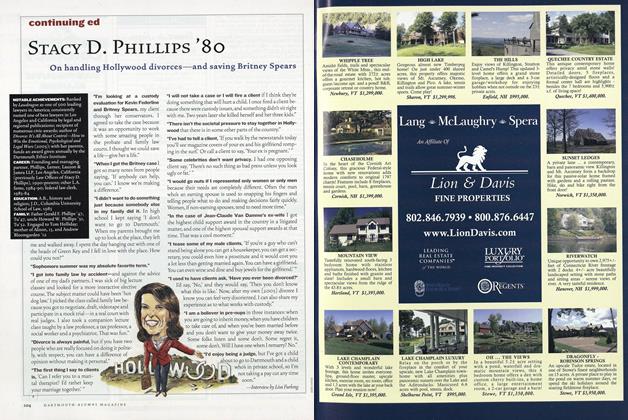 Continuing Ed
Stacy D. Phillips ’80
July/August 2008 -
 Continuing Education
Nancy (Denny) Kellogg ’78
Nov/Dec 2010 -
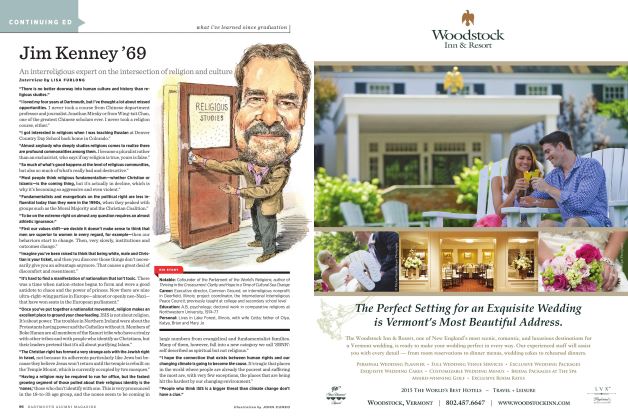 Continuing Education
Jim Kenney ’69
NOVEMBER | DECEMBER 2015 -
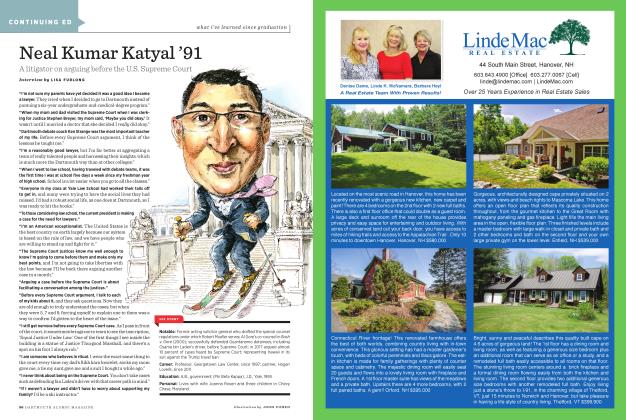 CONTINUING ED
Neal Kumar Katyal ’91
MAY | JUNE 2018 -
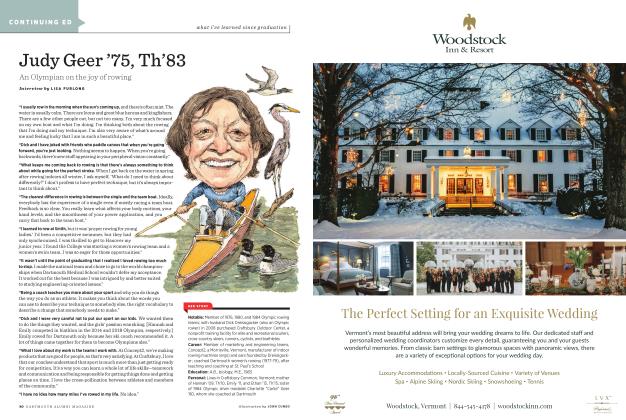 CONTINUING ED
Judy Geer '75, Th’83
NOVEMBER | DECEMBER 2023
