Matthew Wysocki Professor of Art 300 St. Nicks in D single collection
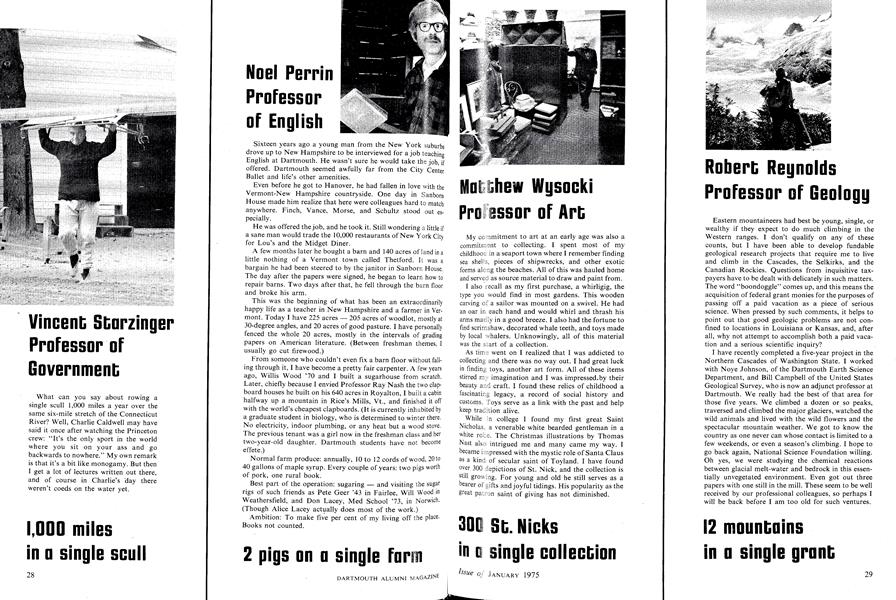
My commitment to art at an early age was also a commitment to collecting. I spent most of my childhood in a seaport town where I remember finding sea shells, pieces of shipwrecks, and other exotic forms along the beaches. All of this was hauled home and served as source material to draw and paint from.
I also recall as my first purchase, a whirligig, the type you would find in most gardens. This wooden carving of a sailor was mounted on a swivel. He had an oar in each hand and would whirl and thrash his arms madly in a good breeze. I also had the fortune to find scrimshaw, decorated whale teeth, and toys made by local whalers. Unknowingly, all of this material was the start of a collection.
As time went on I realized that I was addicted to collecting and there was no way out. I had great luck in finding toys, another art form. All of these items stirred my imagination and I was impressed.by their beauty and craft. I found these relics of childhood a fascinating legacy, a record of social history and customs. Toys serve as a link with the past and help keep tradition alive.
While in college I found my first great Saint Nicholas, a venerable white bearded gentleman in a white robe. The Christmas illustrations by Thomas Nast also intrigued me and many came my way. I became impressed with the mystic role of Santa Claus as a kind of secular saint of Toyland. I have found over 300 depictions of St. Nick, and the collection is still growing. For young and old he still serves as a bearer of gifts and joyful tidings. His popularity as the great patron saint of giving has not diminished.
More From This Issue
-
 Feature
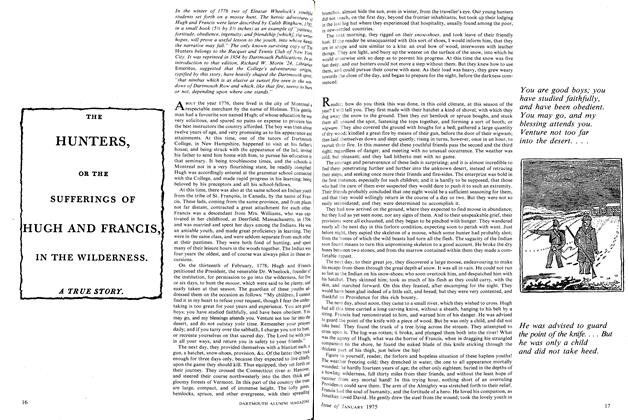
THE HUNTERS, OR THE SUFFERINGS OF HUGH AND FRANCIS, IN THE WILDERNESS.
January 1975 -
 Feature
A Place In the Country
January 1975 -
 Feature
A MEMORANDUM
January 1975 -
Feature
Jeffrey Hart Professor of English 20 million readers in a single column
January 1975 -
 Feature
Noel Perrin Professor of English 2 pigs on a single form
January 1975 -
 Feature
Carole Berger Professor of English 2 wolves in a single run
January 1975
Features
-
 Feature
The Best Part of My Academic Life Here
JUNE/JULY 1984 -
 Feature
On Being a Full Man
July 1962 -
 Feature
Minimum Standards
APRIL • 1985 -
 Feature
Reflections on an $8-million post office The Hopkins Revolution
DEC. 1977 -
 Feature
The DOC: A Learning Experience
APRIL 1968 -
 Feature
Seidman's Early Withdrawal
SEPTEMBER 1990
