Intimate Portraits
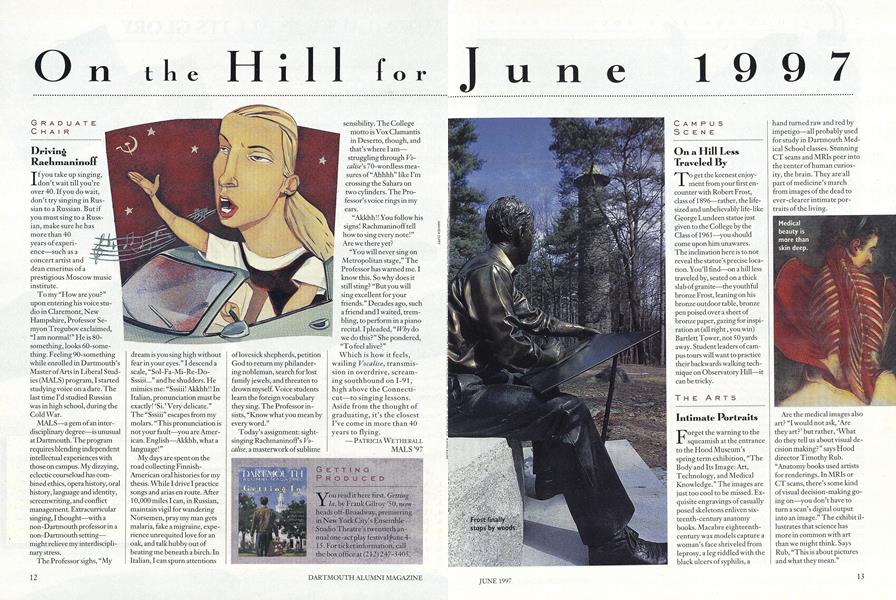
Forget the warning to the squeamish at the entrance to the Hood Museum's spring term exhibition, "The Body and Its Image: Art, Technology, and Medical Knowledge." The images are just too cool to be missed. Exquisite engravings of casually posed skeletons enliven sixteenth-century anatomy books. Macabre eighteenthcentury wax models capture a woman's face shriveled from leprosy, a leg riddled with the black ulcers of syphilis, a hand turned raw and red by impetigo all probably used for study in Dartmouth Medical School classes. Stunning CT scans and MRIs peer into the Center of human curiosity, the brain. They are all part of medicine's march from images of the dead to ever-clearer intimate portraits of the living.
Are the medical images also art? "I would not ask, 'Are they art?' but rather, 'What do they tell us about visual decision making?" says Hood director Timothy Rub. "Anatomy books used artists for renderings. In MRIs or CT scans, there's some kind of visual decision-making going on you don't have to turn a scan's digital output into an image." The exhibit illustrates that science has more in common with art than we might think. Says Rub, "This is about pictures and what they mean."
Medical beauty is more than skin deep.