Modeling Savings
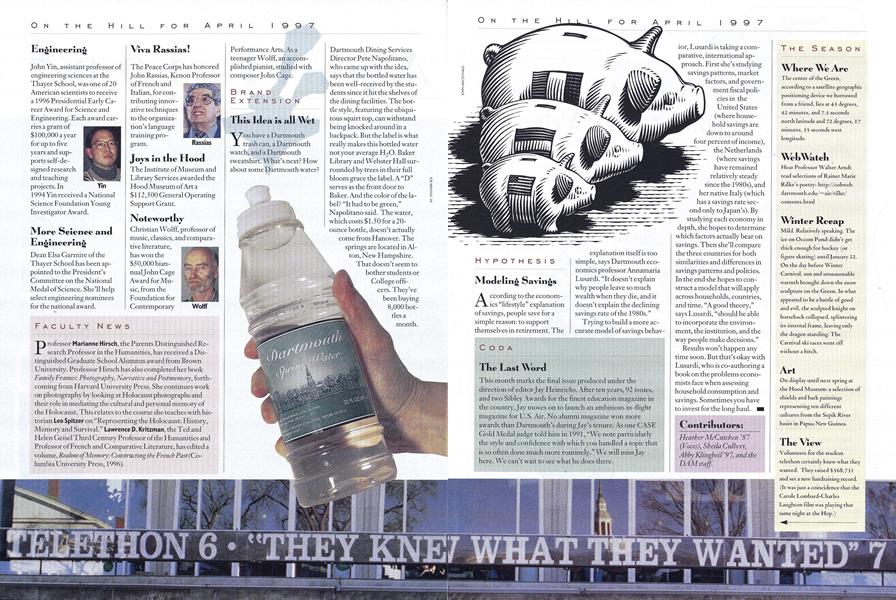
According to the economics "lifestyle" explanation of savings, people save for a simple reason: to support themselves in retirement. The explanation itself is too simple, says Dartmouth economics professor Annamaria Lusardi. "It doesn't explain why people leave so much wealth when they die, and it doesn't explain the declining savings rate of the 1980s."
Trying to build a more accurate model of savings behavior Lusardi is taking a comparative, international approach. First she's studying savings patterns, market factors, and government fiscal policies in the United States (where household savings are down to around four percent of income), the Netherlands (where savings have remained relatively steady since the 1980s), and her native Italy (which has a savings rate second only to Japan's). By studying each economy in depth, she hopes to determine which factors actually bear on savings. Then she'll compare the three countries for both similarities and differences in savings patterns and policies. In the end she hopes to construct a model that will apply across households, countries, and time. "A good theory," says Lusardi, "should be able to incorporate the environment, the institution, and the way people make decisions."
Results won't happen any time soon. But that's okay with Lusardi, who is co-authoring a book on the problems economists face when assessing household consumption and savings. Sometimes you have to invest for the long haul.
Contributors: Heath &r'McCutchen '87(Voces), Sheila Gilbert,Abby:Klhtgheir 97, and theDAM staff.