ALUMNI COUNCIL CHANGES PROPROSED
IT is COMMON KNOWLEDGE among Dartmouth men that their numbers have become more widely and evenly spread over the country as recent classes have graduated. This fact has caused a recurrent demand on the part of alumni groups in formerly sparsely Dartmouth-populated areas to be represented on the Alumni Council. In 1930 a change was made and another in 1933. At present the Council is composed of 31 members, 18 elected directly by the alumni (three from each of the six districts), one from the faculty, three from the secretaries' association, three ex-officio, and six "at large" elected by the Council itself.
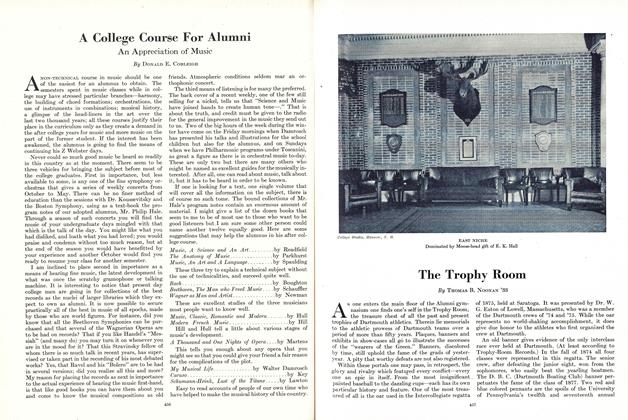
The primary change suggested is to create a new district by dividing the large rambling southern district into southeast and southwest districts. This would increase the membership of the Council to 34- The proposal is that Missouri and Kansas be taken from the middle western district and joined to their economic region, the southwest. That Wyoming and Montana be taken from the Pacific district and joined to the middlewestdistrict as a more natural juncture. That Utah, Colorado, and New Mexico be taken from the Pacific district and be joined to the proposed southwest district to give it a better balance in numbers, and because, it is argued, these states "look" to the east rather than the west coast.
The result of such a change would be to give the states within the Pacific district a better representation (one more member) which their growing population deserves. It likewise gives the states in the middlewest an additional member with the withdrawal of Missouri. At present the great southern district is represented by three members, one from Washington, D. C., one from Chattanooga, and one from Virginia. The southeast can properly use this representation. The proposed new southwest district would have the alumni clubs of St. Louis, Kansas City, Denver, Salt Lake City, Dallas and Tulsa. Springfield (Missouri), Oklahoma City, Houston, other Texas points, and New Orleans are becoming Dartmouth centers. Alumni Council representation would be of great aid in this development.
A committee was appointed by the Alumni Council to consider these proposed changes and others. It has reached the conclusion that aside from the suggestions mentioned above the geographical representation is fair and adequate. However, the committee is most desirous of obtaining comments from the alumni and various clubs and associations concerned. The matter is to be presented to the Council at the coming June meeting and it is hoped that any comments will be sent to the chairman in time for the committee to give them due consideration.
T. B. CURTIS '32, Chairman. 500 Security Building,St. Louis, Missouri.