Cold regions center funded at Thayer School
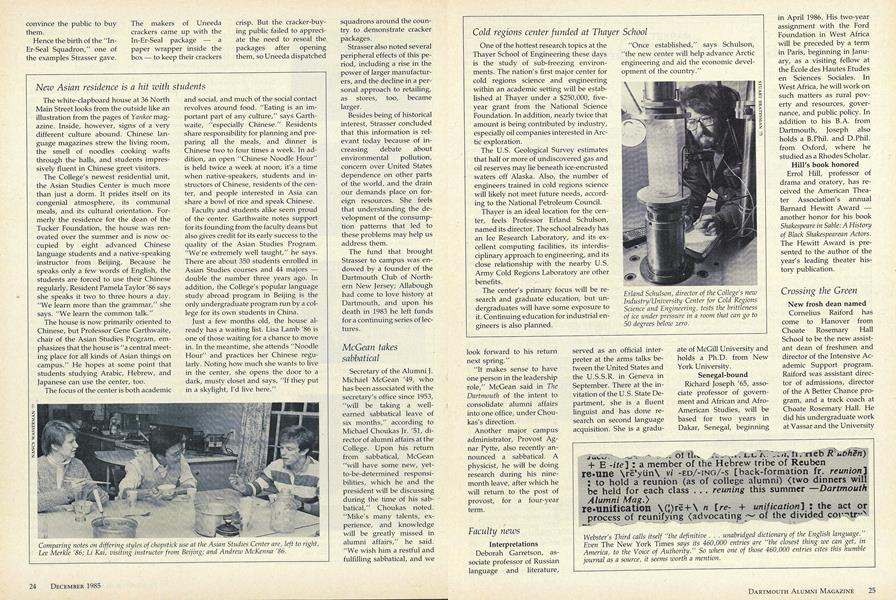
One of the hottest research topics at the Thayer School of Engineering these days is the study of sub-freezing environments. The nation's first major center for cold regions science and engineering within an academic setting will be established at Thayer under a $250,000, fiveyear grant from the National Science Foundation. In addition, nearly twice that amount is being contributed by industry, especially oil companies interested in Arctic exploration.
The U.S. Geological Survey estimates that half or more of undiscovered gas and oil reserves may lie beneath ice-encrusted waters off Alaska. Also, the number of engineers trained in cold regions science will likely not meet future needs, according to the National Petroleum Council.
Thayer is an ideal location for the center, feels Professor Erland Schulson, named its director. The school already has an Ice Research Laboratory, and its excellent computing facilities, its interdisciplinary approach to engineering, and its close relationship with the nearby U.S. Army Cold Regions Laboratory are other benefits.
The center's primary focus will be research and graduate education, but undergraduates will have some exposure to it. Continuing education for industrial engineers is also planned.
"Once established," says Schulson, "the new center will help advance Arctic engineering and aid the economic development of the country."
Erland Schulsoii, director of the College's newIndustry/University Center for Cold RegionsScience and Engineering, tests the brittlenessof ice under pressure in a room that can go to50 degrees below zero.
More From This Issue
-
 Feature
On the Air
December 1985 -
 Feature
The Impact of Section 504
December 1985 -
 Cover Story
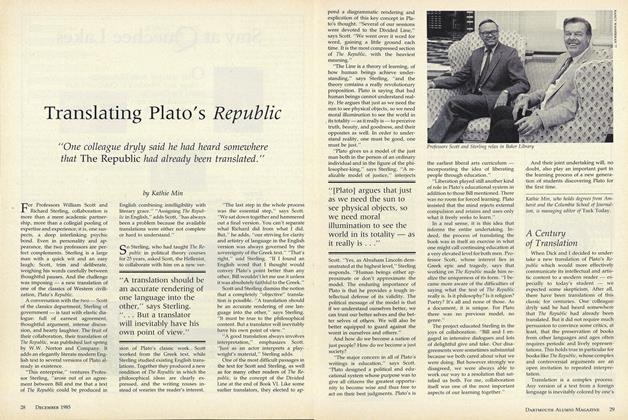
Translating Plato's Republic
December 1985 -
Cover Story
A Century of Translation
December 1985 -
 Cover Story
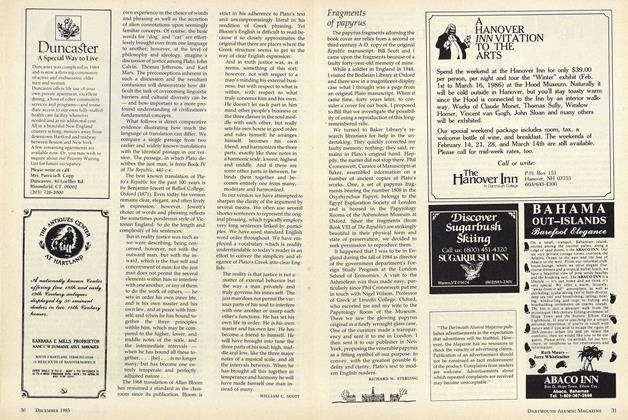
Fragments of papyrus
December 1985 -
 Article
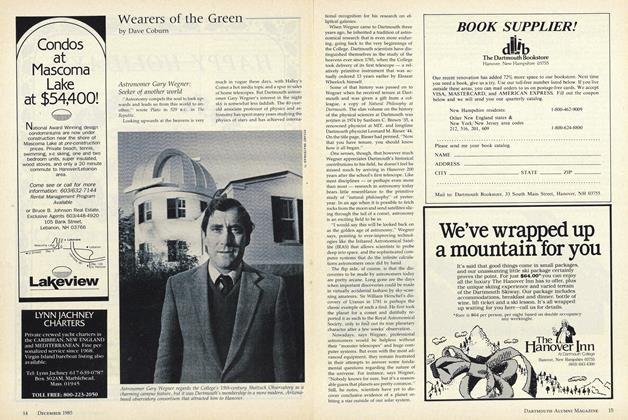
Astronomer Gary Wegner: Seeker of another world
December 1985
Article
-
 Article
OUTING CLUB'S MEDAL GIVEN TO COL. GREENLEAF
February 1920 -
 Article
The Color in Dartmouth's Carnival
February 1937 -
 Article
Six New Members of Alumni Council
April 1954 -
 Article
A Wah Hoo Wah for —
APRIL 1965 -
 Article
Dan'l Webster Still Lives
December 1952 -
 Article
Moosilauke House To Be Open In Winter
NOVEMBER 1931
