1902
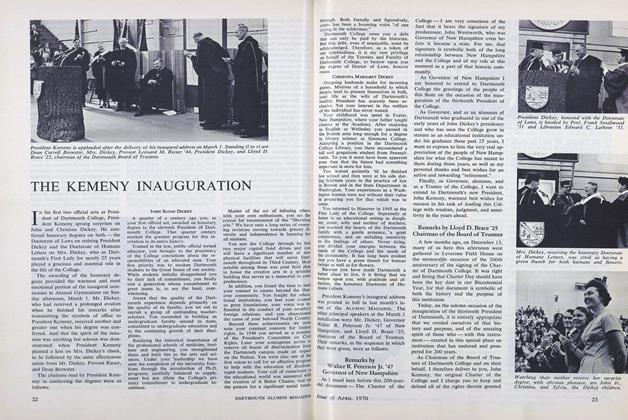
Since my classmates are suffering from dropsy of the pen and failure of writing stimuli, I shall do a little reminiscing. On Sunday afternoon, as I was listening to the inauguration of Dr. John G. Kemeny, the 13th president of Dartmouth, I thought of the presidents, whom, you, my classmates, and I have known.
Dr. William Jewett Tucker was the great leader, close to the student body, a builder of men and an advisor to those of us who needed him. None of us missed his week-day chapel service nor the Sunday evening talks which greatly inspired us. For years after his retirement until his death, Dartmouth night parades took the route by his home on Occom Ridge and cheered as he appeared. Such was our love for this great man.
Dr. Ernest Fox Nichols was the scientist, rather than the minister and was unfortunate to have followed Dr. Tucker.
Dr. Ernest Martin Hopkins, the businessman, class of 1901 and near to us, respected by all, grew to be a great builder of Dartmouth. His was the "aristocracy of brains." Dr. John Sloan Dickey, at first perhaps little known except to his classmates, grew in our affection and our appreciation of his abilities. As Dr. Kemeny said of John, "he built the greatest undergraduate faculty in America." His training in law and government was important for the times. We are proud of John Dickey, both because he has enhanced the reputation of the college and because of the firm stand that he took on sit-ins.
Dr. John G. Kemeny is now the president of Dartmouth. He has been a great teacher of mathematics. He has been popular with the students, because they have appreciated his great abilities and his understanding of many facets of the college including athletics.
Dr. Kemeny will be a tremendously successful president if the student leaders will practice self-discipline; if they will have pride in themselves and the college; if they will remember that their actions reflect the Dartmouth image throughout the state, the country, and the world. They must remember that change can be orderly and without destroying the present and the past.
Although we in 1902 are perhaps three generations away from the student body, we are proud that these boys have been selected as part of the Dartmouth family. We glory in their successes and are sorry for their failures. We want them to be leaders who will guide a better world.
Secretary, 33 Rope Ferry Rd. Hanover, N. H. 03755
Class Agent, 6 Pasture Lane, Darien, Conn. 06820