1963
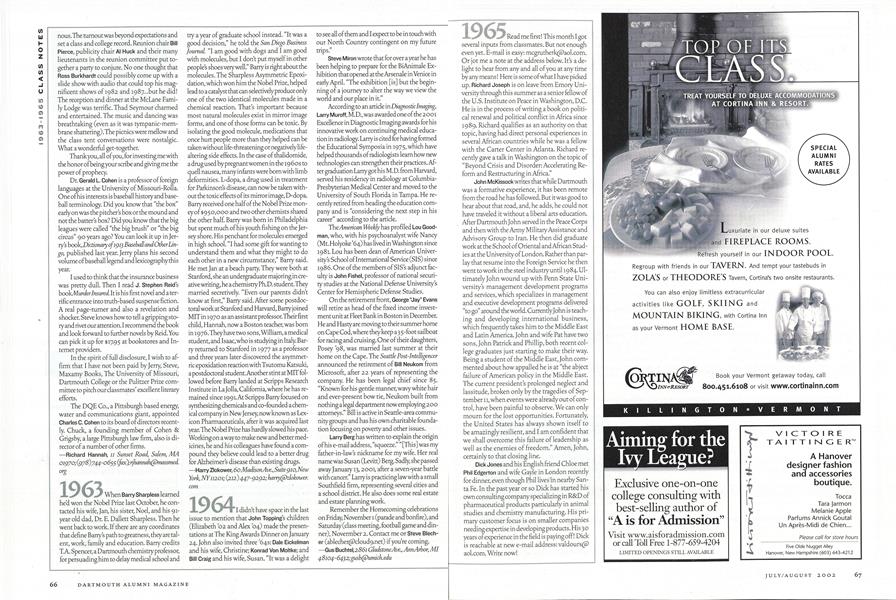
When Barry Sharpless learned he'd won the Nobel Prize last October, he contacted his wife Jan, his sister, Noel, and his 91-year old dad, Dr. E. Dallett Sharpless. Then he went back to work. If there are any coordinates that define Barry's path to greatness, they are talent, work, family and education. Barry credits T.A. Spencer, a Dartmouth chemistry professor, for persuading him to delay medical school and try a year of graduate school instead. "It was a good decision," he told the San Diego BusinessJournal "I am good with dogs and I am good with molecules, but I don't put myself in other people's shoes very well." Barry is right about the molecules. The Sharpless Asymmetric Epoxidation, which won him the Nobel Prize, helped lead to a catalyst that can selectively produce only one of the two identical molecules made in a chemical reaction. That's important because most natural molecules exist in mirror image forms, and one of those forms can be toxic. By isolating the good molecule, medications that once hurt people more than they helped can be taken without life-threatening or negatively lifealtering side effects. In the case of thalidomide, a drugused by pregnant women in the 1960s to quell nausea, many infants were born with limb deformities. L-dopa, a drug used in treatment for Parkinsons disease, can now be taken without the toxic effects of its mirror image, D-dopa. Barry received one half of the Nobel Prize money of $950,000 and two other chemists shared the other half. Barry was born in Philadelphia but spent much of his youth fishing on the Jersey shore. His penchant for molecules emerged in high school. "I had some gift for wanting to understand them and what they might to do each other in a new circumstance," Barry said. He met Jan at a beach party. They were both at Stanford, she an undergraduate majoring in creative writing, he a chemistry Ph.D. student. They married secretively. "Even our parents didn't know at first," Barry said. After some postdoctoral work at Stanford and Harvard, Barry joined MIT in 1970 as an assistant professor. Their first child, Hannah, now a Boston teacher, was born in 1976. They have two sons, William, a medical student, and Isaac, who is studying in Italy. Barry returned to Stanford in 1977 as a professor and three years later discovered the asymmetric epoxidation reaction with Tsutomu Katsuki, a postdoctoral student. Another stint at MIT followed before Barry landed at Scripps Research Institute in La Jolla, California, where he has remained since 1991. At Scripps Barry focused on synthesizing chemicals and co-founded achemical company in New Jersey, now known as Lexicon Pharmaceuticals, after it was acquired last year. The Nobel Prize has hardly slowed his pace. Working on a way to make new and better medicines, he and his colleagues have found a compound they believe could lead to a better drug for Alzheimer's disease than existing drugs.
60 Madison Ave., Suite 910, NewYork, NY 11201; (212) 447-9292; harry@zlokower.com
More From This Issue
-
 Cover Story
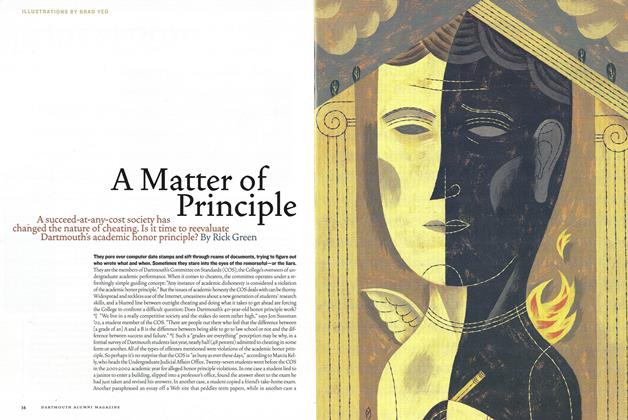
A Matter of Principle
July | August 2002 -
 Feature
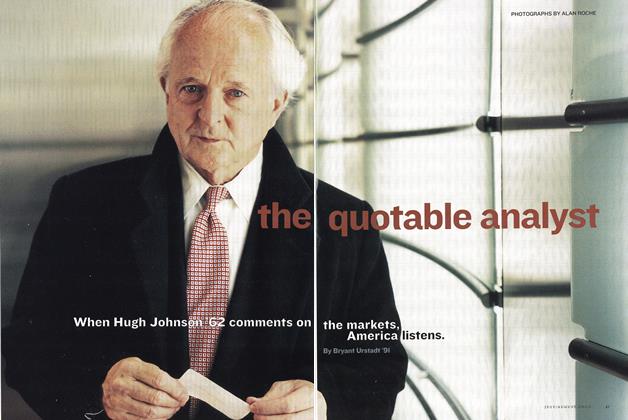
The Quotable Analyst
July | August 2002 -
 Feature
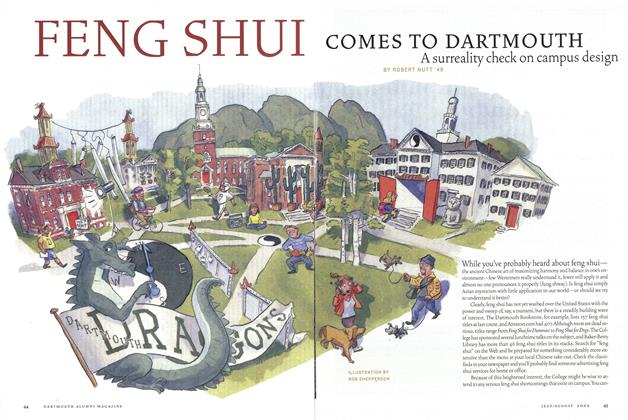
FENG SHUI COMES TO DARTMOUTH
July | August 2002 -
 Outside
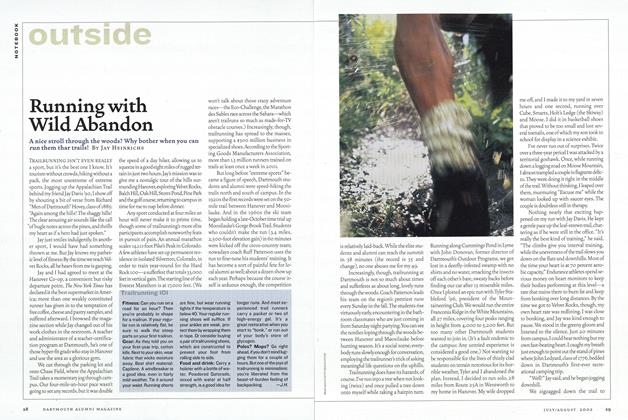
Running With Wild Abandon
July | August 2002 -
 Interview
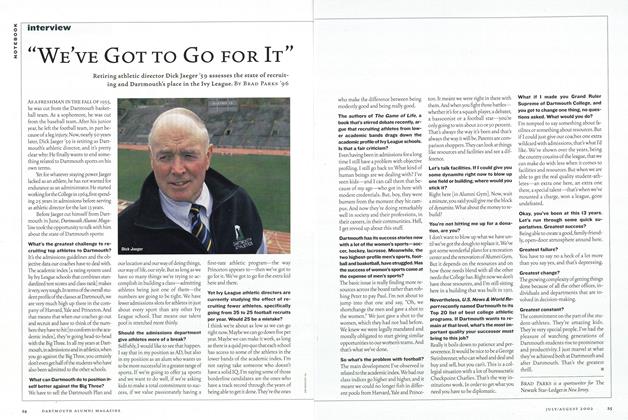
“We’ve Got To Go For It”
July | August 2002 -
 CLASSROOM
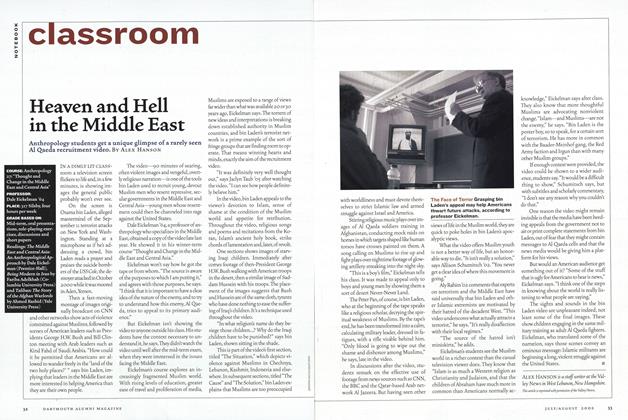
Heaven and Hell in the Middle East
July | August 2002