1939
Having no class news, I am writing about "the greening of Dartmouth" how the College is increasing its energy efficiency and reducing its carbon footprint. "Green rating" is now a big deal for colleges and universities. According to a Princeton Review survey of 10,300 college applicants, 63 percent said that a colleges commitment to the environment could affect their decision to apply.
Referring to the soon-to-be-built visual arts center and Class of 1978 Life Sciences Center, these buildings, like all recent Dartmouth buildings, are registered with the U.S. Green Building Council. The state-of-the-art building envelope design provides that each building is wrapped in a continuous insulation blanket. An article in the June Environmental Building News refers to the new Kemeny-Haldeman building just north of the library on Main Street for its innovative, successful building envelope. The new life sciences center will capture and recycle 80 percent of the heat in the air being expelled from the building and will recover 100 percent of roof-collected rainwater for non-potable reuse. This building will use less than half the energy of the best-performing laboratorybuildings.
Dartmouth was a pioneer and leader in energy efficiency long before it was fashionable and is widely recognized as one of the greenest colleges in the country. In the last two years only Dartmouth and Harvard have received the highest grade on the Sustainable Endowments Institutes annual college sustainability report card. The College trustees recently approved a $12.5 million investment in energy efficiency, which is expected to reduce Dartmouth's energy footprint by 15 to 20 percent.
37 Rayton Road, Hanover,NH 03755; (603) 643-4320
More From This Issue
-
 COVER STORY
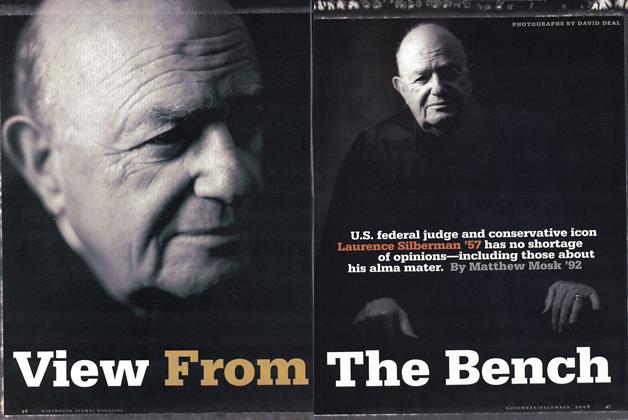
View From the Bench
November | December 2008 -
 Feature
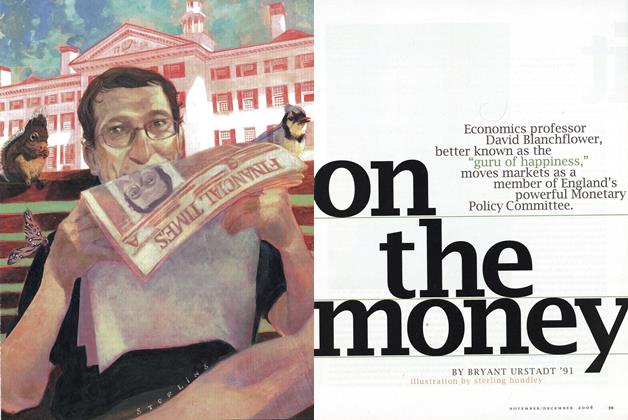
On the Money
November | December 2008 -
 Feature
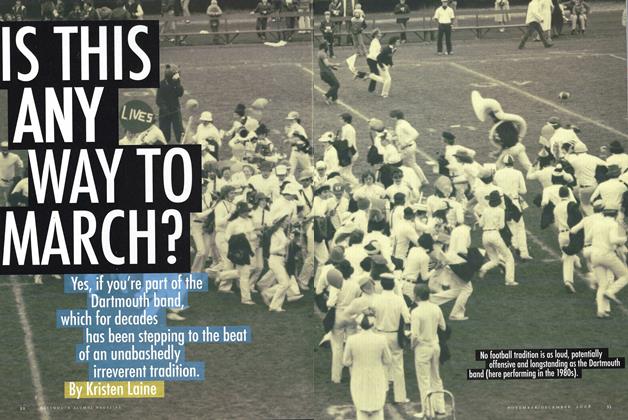
Is This Any Way To March?
November | December 2008 -
 Feature
Notebook
November | December 2008 -
 Feature
Alumni News
November | December 2008 -
 PERSONAL HISTORY
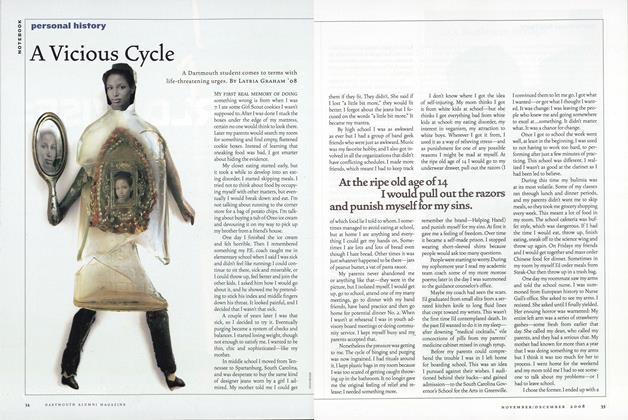
A Vicious Cycle
November | December 2008