Just One Spill
Trustee meetings are weighty things, but every once in a while they degenerate into larkishness. A couple of months ago, the trustees decided that the best way to show their gratitude to the employees of the Hanover Inn was to invite them all to a formal dinner at the Inn. Who would tend bar, wait table, and bus dishes? The trustees, of course. A lot of other important types on campus heard about the project and started clamoring for aprons, too. They were given a hearty, Tom Sawyer welcome, and the event was on. Among the dignitaries present were Nancy Elliott, director of Alumni Records; Helen Bridge, director of public events at the Medical School; President David McLaughlin '54 and his wife Judy; Robert Brace '52, who chairs the Hanover Inn overseers and the Alumni Fund; George Colton '35, vice president emeritus; Allan Dingwall '42, associate director of the Alumni Fund; Trustee Norman McCulloch '50 and his wife Dottie; and vice presidents Addison Winship '42 and Paul Paganucci '53. The acerbic lady in Alumni Records offered us the following eyewitness account:
"We chosen few were divided into three groups - bar, buffet, and tables. Helen Bridge came in her track shoes, ready for action. They gave us a couple of drinks and then presented us with beautiful aprons that said, 'ln 1780 the Hanover Inn was the only place to stay and it still is.' (We got to keep those.) My group tables was taken to the kitchen and given the word: 'ln 12 minutes, 240 people are coming to dinner.' We panicked. Where was the milk? Whaddya mean there are two kinds of ice? Where's my station? The major problem was whether to serve from the right or the left. Nobody could remember for more than five minutes.
"We were assigned to tables in twos. The food was magnificent. President McLaughlin was behind one hunk of roast beef and Bob Brace was behind the other. The president's wife was in - our group waiting tables. The employees came, wondering what would happen, and the sad part is that most of them and most of us were nervous or something and played it kinda straight.
"Not me, of course. I hammed it up. I still had a drink and I carried it around with me while I waited table. A customer would give me an order and I'd say, 'No, no. I can't do that. That's too complicated.' I berated them for ordering cheap drinks and griped because they were taking too long to order. I told them they couldn't smoke because I couldn't stand the smell. After a while, I sat down at the table with them and listened to their complaints. (My partner was wonderful. He did all the work.) In fact, I was so insulting that the people at the next table started complaining that they weren't getting any of the action. But they were out of luck. That was George Colton's table and can you imagine George Colton insulting anybody? He was stumbling all over himself doing everything perfectly.
"Helen Bridge was on drinks at the bar, and she said the employees started throwing really weird drink orders at her, things like Harvey Wallbangers. She said she made only one mistake, though, and she drank that. The only spill was Dingwall's. Toward the end of the evening, he was telling his table what a great job he haddone, and he flung his arm out to congratulate himself and knocked a drink over in a woman's lap.
"Everybody had a great time. I'd go back tomorrow. I enjoy that sort of thing. It takes me back to the days when I waited table at the Inn when they were desperate. They told me then, 'Nancy, it took 150 years to build the reputation of this Inn, and you have ruined it in one week.' I think we ought to do it again next year."
THE most noisy men are those who would like to see the College quite swept off its old foundations into what they call liberalism. . . . Our alumni will not do anything for the College only to volunteer to manage it. And the best men among them will not do this much." Trustee Henry Fairbanks, 1891
More From This Issue
-
 Feature
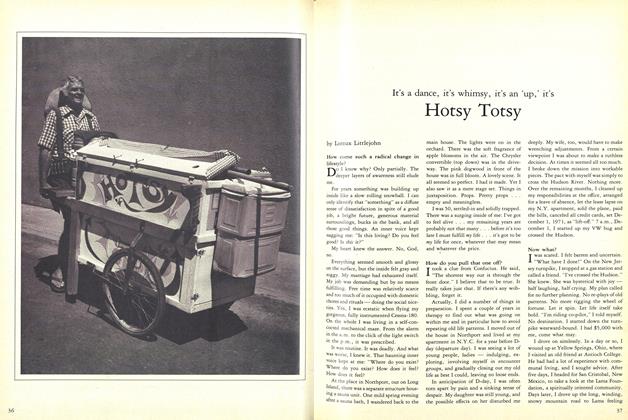
Hotsy Totsy
April 1982 -
 Feature
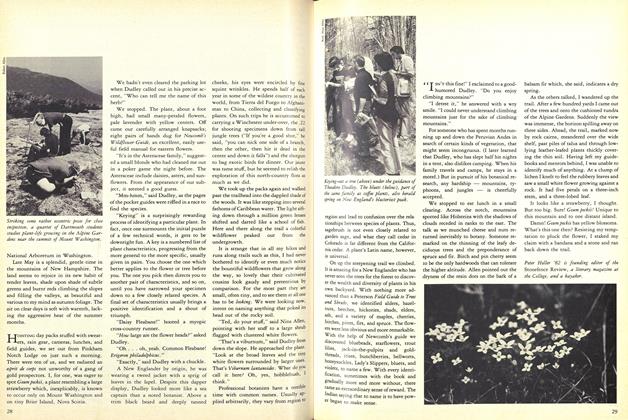
The Man Behind the Green
April 1982 -
 Feature
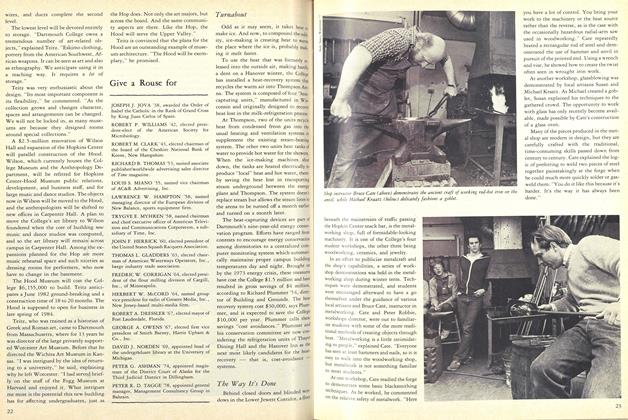
End of a Golden era
April 1982 -
 Cover Story
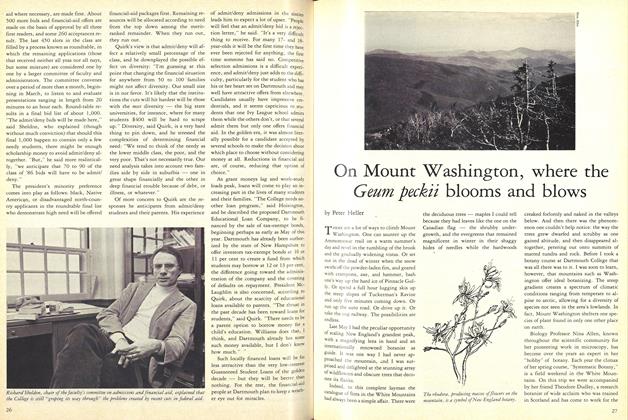
On Mount Washington, where the Geum Peckii blooms and blows
April 1982 -
 Article
CONSTITUTION OF THE COUNCIL OF THE ALUMNI OF DARTMOUTH COLLEGE
April 1982 -
 Article
Seer in the Dark
April 1982